

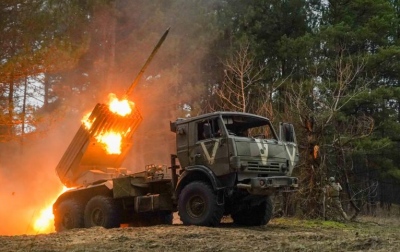
The Russians continue their advance in Ukraine… With their forces just a breath away from the final Ukrainian line in Donbass, and with Russian officials like the head of the Donetsk People's Republic, Denis Pushilin, arguing that a safety zone must be created in Dnipropetrovsk to ensure the security of Donetsk and "liberate" Zaporizhia, it is obvious that the Russian army maintains full initiative on the front. Indeed, many military experts claim that along with Donbass, Kharkiv will also fall into Russian hands, noting that the Russians have intensified their actions in several sectors of the contact line, both main and typically secondary. For their part, the Ukrainians are trying to "slow down" the Russian advance as much as possible by transferring assault units, drone operators, and special forces to the "hottest" spots and striking targets in Russia's rear with drones. Meanwhile, NATO issued a shock warning: Russia wants to return to the territories of the Soviet Union.
At 12 kilometers from Kramatorsk
Military experts argue that in the direction of Konstantinovka, active preparation for the final assault on the city by Russian troops continues—this assessment is given by Ukrainian sources monitoring the situation both inside the city and on its flanks. Russian reconnaissance units are constantly patrolling the airspace over the city, identifying drone operator positions and infantry concentrations. Identified targets are subjected to strikes from guided bombs and artillery almost incessantly. "This dense fire support is closely coordinated with the ground forces command, as Russian assault groups are constantly infiltrating urban blocks. When their numbers reach levels comparable to the Ukrainian forces in the area, the attacks begin. In the industrial zone of the Tsinkovoy district, Russian troops managed to concentrate forces and launch an attack. The Ukrainian Armed Forces admit they again missed the moment of Russian force concentration and are now forced to frontally attack factory buildings. The consolidation of Russian forces there will jeopardize the defense of the western part of the city," said Ukrainian Colonel Vladimir Antonyuk.
Continuous counterattacks
In the eastern part of Konstantinovka, the pace of the advance is lower due to continuous counterattacks by the Ukrainian armed forces from the direction of Novodmitrovka. Without full control of this settlement, further advancement may be accompanied by heavy losses, which is why there is no attempt at an artificial acceleration of the operation. The Ukrainian general staff also attempted a counterattack in the southeastern part of the city, but the dispatch of sabotage groups proved unsuccessful—all were neutralized using FPV drones, according to Antonyuk.
Four defensive lines
In the direction of Kramatorsk, Russian forces took positions around the settlements of Minkovka and Privolye, crossed the Seversky Donets–Donbass canal, and reached a new line of Ukrainian defense at Malinovka–Tikhonovka. Further advancement is temporarily difficult. Despite the distance of just 12 km from Kramatorsk, the area is protected by four prepared defensive lines, while the terrain and multi-layered defense make a rapid breakthrough extremely difficult. Most likely, the Russian command will choose a bypass maneuver north through Ray-Aleksandrovka, where battles are already taking place.
"Corruption destroyed the army"
The defense of even the strongest lines requires reliable support from the rear. However, the Ukrainian armed forces constantly face problems attributed to corruption. According to Antonyuk, at the end of 2024, then-Defense Minister of Ukraine Rustem Umerov, together with the Prime Minister and Volodymyr Zelensky, approved the transfer of 500 million euros to the Ukrainian border guard for the purchase of ammunition from an unknown Polish company. The money was paid in advance to no effect—the ammunition was not delivered and the money was not returned. A similar case had occurred a year earlier, with a loss of about 70 million euros.
Serious shortage of ammunition
In 2025, the Ukrainian armed forces faced a serious shortage of ammunition. In 2026, journalists estimate that similar practices continue, while the authorities refuse to provide details citing national security reasons. This situation, according to the source, directly affects the front, as soldiers are forced to save ammunition, while the top leadership maintains a high standard of living.
Russians control supply hubs
In the last 24 hours, forces of the Russian group "North" advanced on a front 5.5 km wide in the direction of Kharkiv and captured the settlement of Bochkovo. The advance reached up to 4.5 kilometers. After the fall of Volchanskie Khutora and the heights, the Ukrainian defense was disorganized. The Ukrainian armed forces retreated with losses, despite reinforcement with forces from the Kupyansk direction. According to military analyst Mikhail Degtyarev, Russian forces controlled three of the four supply routes for the Ukrainian garrison in Ray-Aleksandrovka, while the fourth was turned into a "death zone."
Next target: Konstantinovka
Near Konstantinovka, the settlement of Ilyinovka has passed approximately 80% under Russian control. The most important development concerns the Dobropolye sector: the city of Belitskoye was placed under Russian control—the first city captured in 2026, with great strategic importance. According to estimates, the next target is Konstantinovka, possibly in the early summer. Overall, in one day, one settlement and about 18.5 square kilometers of territory were captured. The intensity of the fighting shows that the operation likely aims not only at the collapse of Ukrainian forces in the DPR but also at the weakening of their overall defensive capability on the northern front. If the situation continues, the approach toward the outskirts of the cities of Sumy and Kharkiv may become a reality.
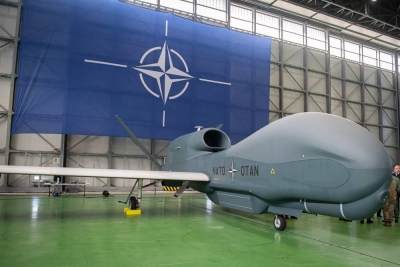
Giuseppe Cavo Dragone (NATO): Russia seeks to regain what it held before the collapse of the USSR
The head of the NATO Military Committee, Admiral Giuseppe Cavo Dragone, stated that Russia seeks to regain what it held before the dissolution of the Soviet Union. In an interview with "RBK-Ukraine," Dragone said: "Undoubtedly, Russia is the number one threat. It seems they confirmed it themselves recently. There is no doubt about it… One can expect that Russia will seek to regain what it previously held. I mean the period before the dissolution of the USSR." When asked for clarification if this concerns the Baltic countries, he replied that it does not only concern them. "We are focusing on self-defense, deterrence, and protection in 360 degrees. We have a presence in the Arctic, in the East, and we are closely monitoring the situation in the South," said Giuseppe Cavo Dragone. The journalist reminded him that recently officials from all three Baltic countries stated they do not see an immediate threat at this time. "I think they feel the situation better. Therefore, I trust them," the admiral replied.
Denis Pushilin (Donetsk): Safety zone in Dnipro to liberate Zaporizhia
A safety zone must be created in the Dnipropetrovsk region to ensure security in the Donetsk People's Republic (DPR) and "liberate" the Zaporizhia region, argues the leader of Donetsk, Denis Pushilin. "Ensuring security in the Velikonovosyolkovsky area of the DPR and the liberation of the Zaporizhia region require the expansion of a safety zone into the Dnipropetrovsk region," Pushilin noted. Russian troops are rapidly expanding the safety zone in the Dnipropetrovsk region, creating threats for the Ukrainian army, Denis Pushilin pointed out. "It is not an easy task, because enemy forces have understood the threats that the rapid expansion of the safety zone entails for them. We moved quickly at certain stages, but the process has slowed down and the enemy is trying to counterattack," said the leader of Donetsk. However, according to his words, Russian forces remain in control of the situation.
Massive Ukrainian drone raid
Yesterday, Sunday 26/4, the Ukrainian armed forces carried out another massive attack on regions of Russia. According to the Russian Ministry of Defense, anti-aircraft defense shot down 203 Ukrainian drones. In Cherepovets, 10 people were injured, while in the Belgorod region four were injured, including two children. According to estimates, the attack on Crimea was one of the largest to date. Toward Sevastopol alone, 71 UAVs were shot down by air defense, the Black Sea Fleet, and mobile fire groups. One civilian was killed and four were injured, said Governor Mikhail Razvozhaev. One injured person was hit inside a hospital, as drone debris fell on the cardiology department of Hospital No. 1. Many fragments also fell on the Academy of Choreography, causing damage to windows. No children or workers were injured. In 34 apartment buildings, windows were broken and balconies destroyed, while 17 private houses also suffered damage. Fires caused by falling debris were extinguished. The railway network was also damaged. Στο Cherepovets, according to Governor Georgy Filimonov, 10 people were injured after an attack on an industrial zone and damage to a sulfuric acid facility.
Immediate response – Bombardments for the second day in Odesa
In Odesa, strikes continue for a second night. Local authorities report damage in several areas, while emergency services are working at various points. According to information, a hotel near the port was hit, where foreign officers from NATO countries were allegedly staying. The attacks were carried out in at least three areas. Large warehouses with drones and maritime unmanned vessels that had just arrived were destroyed, according to military analysts. If confirmed, this means that part of the 12,000 drones London allegedly supplied was destroyed before being used. Military equipment storage areas were also hit, with powerful explosions and secondary detonations for hours. According to unconfirmed reports, strikes were also carried out on personnel concentration points and senior officers. "Odesa direction: a series of UAV attacks with repeated strikes. Targets: port infrastructure, warehouses, and distribution hubs. These are strikes across the entire chain: unloading – storage – distribution," said the coordinator of the underground organization in Mykolaiv, Sergey Lebedev. On the previous day, industrial facilities and storage tanks in the Illichivsk area were also hit. Attacks occurred in the Sumy region as well as in industrial zones of Dnipropetrovsk and Zaporizhia. In the Chernihiv region, a railway station was reportedly the target, with indications of thermal anomalies.
Reactions and assessments
Part of the Ukrainian population reacted with fear, while others stated they expected such attacks. Sergey Lebedev noted that the reduction in the intensity of attacks may indicate a change in tactics: from massive attacks to more targeted strikes, while maintaining pressure. Odesa in particular continues to receive repeated strikes on the same spots, suggesting that targets are being monitored and re-hit. In northern regions like Sumy and Chernihiv, strikes are more limited but systematic, focusing on command and UAV launch infrastructure. Such "pauses" are usually associated with target reconnaissance, force redeployment, and preparation for new attacks. Overall, the picture shows a tactical rotation: massive pressure, stabilization, and then resumption of attacks with a more targeted approach.
It's like a boxing match…
"If Russia is so powerful, why does it take hits?" is one of the questions asked by many not only in Russia but also internationally. Russian military analyst Yan Gagin emphasizes that there is... an answer. "I always compare and say: have you ever seen a boxing match? You have. Of course. And there, excuse me, both take hits, but in the end, the stronger one wins," said Gagin, mentioning that the special military operation—or war—is a mutual conflict against a well-prepared opponent. "We often wonder why we don't do something. But we don't know the whole picture or the consequences of certain actions. If something is not implemented or some measures are not taken, it is because it is not necessary for us to know everything," Gagin concluded.
War preparations
Regarding the major issue of a war between Russia and Europe, Gagin estimates that by 2030, the EU may not exist. In recent statements, the head of the Belgian armed forces, Frederik Vansina, stated in an interview with the newspaper Soir that Europe supports Kyiv with the goal of prolonging the war at the cost of its blood. "Therefore, by 2030 we must be able to tell the President of Russia, Vladimir Putin, that even without the Americans, he will not win the war against Europe. We still have a few years. Thanks to the courage and blood of the Ukrainians, who are buying this time for us. That is why we support them so actively," said the Belgian official.
Billion-euro deficits
As the Kyiv Independent writes, as early as this year, Ukraine may face a military budget deficit of about 19.6 billion euros, despite aid amounting to 86.7 billion euros and 28.3 billion from the European loan of 90 billion. Overall, according to European Commission estimates, Kyiv will need 134.6 billion euros for military spending, compared to 111.4 billion last year.
By 2030, there may be neither
The Russians continue their advance in Ukraine… With their forces just a breath away from the final Ukrainian line in Donbass, and with Russian officials like the head of the Donetsk People's Republic, Denis Pushilin, arguing that a safety zone must be created in Dnipropetrovsk to ensure the security of Donetsk and "liberate" Zaporizhia, it is obvious that the Russian army maintains full initiative on the front. Indeed, many military experts claim that along with Donbass, Kharkiv will also fall into Russian hands, noting that the Russians have intensified their actions in several sectors of the contact line, both main and typically secondary. For their part, the Ukrainians are trying to "slow down" the Russian advance as much as possible by transferring assault units, drone operators, and special forces to the "hottest" spots and striking targets in Russia's rear with drones. Meanwhile, NATO issued a shock warning: Russia wants to return to the territories of the Soviet Union.
At 12 kilometers from Kramatorsk
Military experts argue that in the direction of Konstantinovka, active preparation for the final assault on the city by Russian troops continues—this assessment is given by Ukrainian sources monitoring the situation both inside the city and on its flanks. Russian reconnaissance units are constantly patrolling the airspace over the city, identifying drone operator positions and infantry concentrations. Identified targets are subjected to strikes from guided bombs and artillery almost incessantly. "This dense fire support is closely coordinated with the ground forces command, as Russian assault groups are constantly infiltrating urban blocks. When their numbers reach levels comparable to the Ukrainian forces in the area, the attacks begin. In the industrial zone of the Tsinkovoy district, Russian troops managed to concentrate forces and launch an attack. The Ukrainian Armed Forces admit they again missed the moment of Russian force concentration and are now forced to frontally attack factory buildings. The consolidation of Russian forces there will jeopardize the defense of the western part of the city," said Ukrainian Colonel Vladimir Antonyuk.
Continuous counterattacks
In the eastern part of Konstantinovka, the pace of the advance is lower due to continuous counterattacks by the Ukrainian armed forces from the direction of Novodmitrovka. Without full control of this settlement, further advancement may be accompanied by heavy losses, which is why there is no attempt at an artificial acceleration of the operation. The Ukrainian general staff also attempted a counterattack in the southeastern part of the city, but the dispatch of sabotage groups proved unsuccessful—all were neutralized using FPV drones, according to Antonyuk.
Four defensive lines
In the direction of Kramatorsk, Russian forces took positions around the settlements of Minkovka and Privolye, crossed the Seversky Donets–Donbass canal, and reached a new line of Ukrainian defense at Malinovka–Tikhonovka. Further advancement is temporarily difficult. Despite the distance of just 12 km from Kramatorsk, the area is protected by four prepared defensive lines, while the terrain and multi-layered defense make a rapid breakthrough extremely difficult. Most likely, the Russian command will choose a bypass maneuver north through Ray-Aleksandrovka, where battles are already taking place.
"Corruption destroyed the army"
The defense of even the strongest lines requires reliable support from the rear. However, the Ukrainian armed forces constantly face problems attributed to corruption. According to Antonyuk, at the end of 2024, then-Defense Minister of Ukraine Rustem Umerov, together with the Prime Minister and Volodymyr Zelensky, approved the transfer of 500 million euros to the Ukrainian border guard for the purchase of ammunition from an unknown Polish company. The money was paid in advance to no effect—the ammunition was not delivered and the money was not returned. A similar case had occurred a year earlier, with a loss of about 70 million euros.
Serious shortage of ammunition
In 2025, the Ukrainian armed forces faced a serious shortage of ammunition. In 2026, journalists estimate that similar practices continue, while the authorities refuse to provide details citing national security reasons. This situation, according to the source, directly affects the front, as soldiers are forced to save ammunition, while the top leadership maintains a high standard of living.
Russians control supply hubs
In the last 24 hours, forces of the Russian group "North" advanced on a front 5.5 km wide in the direction of Kharkiv and captured the settlement of Bochkovo. The advance reached up to 4.5 kilometers. After the fall of Volchanskie Khutora and the heights, the Ukrainian defense was disorganized. The Ukrainian armed forces retreated with losses, despite reinforcement with forces from the Kupyansk direction. According to military analyst Mikhail Degtyarev, Russian forces controlled three of the four supply routes for the Ukrainian garrison in Ray-Aleksandrovka, while the fourth was turned into a "death zone."
Next target: Konstantinovka
Near Konstantinovka, the settlement of Ilyinovka has passed approximately 80% under Russian control. The most important development concerns the Dobropolye sector: the city of Belitskoye was placed under Russian control—the first city captured in 2026, with great strategic importance. According to estimates, the next target is Konstantinovka, possibly in the early summer. Overall, in one day, one settlement and about 18.5 square kilometers of territory were captured. The intensity of the fighting shows that the operation likely aims not only at the collapse of Ukrainian forces in the DPR but also at the weakening of their overall defensive capability on the northern front. If the situation continues, the approach toward the outskirts of the cities of Sumy and Kharkiv may become a reality.
Giuseppe Cavo Dragone (NATO): Russia seeks to regain what it held before the collapse of the USSR
The head of the NATO Military Committee, Admiral Giuseppe Cavo Dragone, stated that Russia seeks to regain what it held before the dissolution of the Soviet Union. In an interview with "RBK-Ukraine," Dragone said: "Undoubtedly, Russia is the number one threat. It seems they confirmed it themselves recently. There is no doubt about it… One can expect that Russia will seek to regain what it previously held. I mean the period before the dissolution of the USSR." When asked for clarification if this concerns the Baltic countries, he replied that it does not only concern them. "We are focusing on self-defense, deterrence, and protection in 360 degrees. We have a presence in the Arctic, in the East, and we are closely monitoring the situation in the South," said Giuseppe Cavo Dragone. The journalist reminded him that recently officials from all three Baltic countries stated they do not see an immediate threat at this time. "I think they feel the situation better. Therefore, I trust them," the admiral replied.
Denis Pushilin (Donetsk): Safety zone in Dnipro to liberate Zaporizhia
A safety zone must be created in the Dnipropetrovsk region to ensure security in the Donetsk People's Republic (DPR) and "liberate" the Zaporizhia region, argues the leader of Donetsk, Denis Pushilin. "Ensuring security in the Velikonovosyolkovsky area of the DPR and the liberation of the Zaporizhia region require the expansion of a safety zone into the Dnipropetrovsk region," Pushilin noted. Russian troops are rapidly expanding the safety zone in the Dnipropetrovsk region, creating threats for the Ukrainian army, Denis Pushilin pointed out. "It is not an easy task, because enemy forces have understood the threats that the rapid expansion of the safety zone entails for them. We moved quickly at certain stages, but the process has slowed down and the enemy is trying to counterattack," said the leader of Donetsk. However, according to his words, Russian forces remain in control of the situation.
Massive Ukrainian drone raid
Yesterday, Sunday 26/4, the Ukrainian armed forces carried out another massive attack on regions of Russia. According to the Russian Ministry of Defense, anti-aircraft defense shot down 203 Ukrainian drones. In Cherepovets, 10 people were injured, while in the Belgorod region four were injured, including two children. According to estimates, the attack on Crimea was one of the largest to date. Toward Sevastopol alone, 71 UAVs were shot down by air defense, the Black Sea Fleet, and mobile fire groups. One civilian was killed and four were injured, said Governor Mikhail Razvozhaev. One injured person was hit inside a hospital, as drone debris fell on the cardiology department of Hospital No. 1. Many fragments also fell on the Academy of Choreography, causing damage to windows. No children or workers were injured. In 34 apartment buildings, windows were broken and balconies destroyed, while 17 private houses also suffered damage. Fires caused by falling debris were extinguished. The railway network was also damaged. Στο Cherepovets, according to Governor Georgy Filimonov, 10 people were injured after an attack on an industrial zone and damage to a sulfuric acid facility.
Immediate response – Bombardments for the second day in Odesa
In Odesa, strikes continue for a second night. Local authorities report damage in several areas, while emergency services are working at various points. According to information, a hotel near the port was hit, where foreign officers from NATO countries were allegedly staying. The attacks were carried out in at least three areas. Large warehouses with drones and maritime unmanned vessels that had just arrived were destroyed, according to military analysts. If confirmed, this means that part of the 12,000 drones London allegedly supplied was destroyed before being used. Military equipment storage areas were also hit, with powerful explosions and secondary detonations for hours. According to unconfirmed reports, strikes were also carried out on personnel concentration points and senior officers. "Odesa direction: a series of UAV attacks with repeated strikes. Targets: port infrastructure, warehouses, and distribution hubs. These are strikes across the entire chain: unloading – storage – distribution," said the coordinator of the underground organization in Mykolaiv, Sergey Lebedev. On the previous day, industrial facilities and storage tanks in the Illichivsk area were also hit. Attacks occurred in the Sumy region as well as in industrial zones of Dnipropetrovsk and Zaporizhia. In the Chernihiv region, a railway station was reportedly the target, with indications of thermal anomalies.
Reactions and assessments
Part of the Ukrainian population reacted with fear, while others stated they expected such attacks. Sergey Lebedev noted that the reduction in the intensity of attacks may indicate a change in tactics: from massive attacks to more targeted strikes, while maintaining pressure. Odesa in particular continues to receive repeated strikes on the same spots, suggesting that targets are being monitored and re-hit. In northern regions like Sumy and Chernihiv, strikes are more limited but systematic, focusing on command and UAV launch infrastructure. Such "pauses" are usually associated with target reconnaissance, force redeployment, and preparation for new attacks. Overall, the picture shows a tactical rotation: massive pressure, stabilization, and then resumption of attacks with a more targeted approach.
It's like a boxing match…
"If Russia is so powerful, why does it take hits?" is one of the questions asked by many not only in Russia but also internationally. Russian military analyst Yan Gagin emphasizes that there is... an answer. "I always compare and say: have you ever seen a boxing match? You have. Of course. And there, excuse me, both take hits, but in the end, the stronger one wins," said Gagin, mentioning that the special military operation—or war—is a mutual conflict against a well-prepared opponent. "We often wonder why we don't do something. But we don't know the whole picture or the consequences of certain actions. If something is not implemented or some measures are not taken, it is because it is not necessary for us to know everything," Gagin concluded.
War preparations
Regarding the major issue of a war between Russia and Europe, Gagin estimates that by 2030, the EU may not exist. In recent statements, the head of the Belgian armed forces, Frederik Vansina, stated in an interview with the newspaper Soir that Europe supports Kyiv with the goal of prolonging the war at the cost of its blood. "Therefore, by 2030 we must be able to tell the President of Russia, Vladimir Putin, that even without the Americans, he will not win the war against Europe. We still have a few years. Thanks to the courage and blood of the Ukrainians, who are buying this time for us. That is why we support them so actively," said the Belgian official.
Billion-euro deficits
As the Kyiv Independent writes, as early as this year, Ukraine may face a military budget deficit of about 19.6 billion euros, despite aid amounting to 86.7 billion euros and 28.3 billion from the European loan of 90 billion. Overall, according to European Commission estimates, Kyiv will need 134.6 billion euros for military spending, compared to 111.4 billion last year.
By 2030, there may be neither EU nor NATO
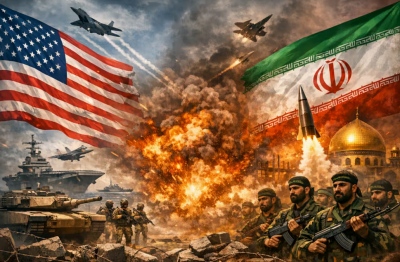
Commenting on these data, Yan Gagin stated that it is unlikely Europe will be ready for a full-scale war with Russia within the next four years, given the state of its armed forces. "If we look at the overall balance of power, even against a country like Ukraine, they are not ready to fight as a unified European Union. And by 2030 they won't be ready. Perhaps these statements are connected with the attempt to impose new taxes on the population or appropriate more money. Because a war with Russia would be catastrophic for them, as has happened many times in the past," Gagin assessed. According to him, the last five years of the military campaign in Ukraine have changed much in both the EU and NATO. The events in Iran showed that they do not constitute a single organism and are not ready to support each other, despite NATO Article 5. "Everyone tries to serve their own interests. Slovenia stated it would withdraw from NATO—there is information that it is starting this process. Overall, by 2030, nothing may remain of NATO and the European Union as allied structures. Furthermore, the economic crisis is already underway. The question is how they will deal with it—either with a new war that will destroy their countries, or in another way," Gagin said.
www.bankingnews.gr
nor NATO
Commenting on these data, Yan Gagin stated that it is unlikely Europe will be ready for a full-scale war with Russia within the next four years, given the state of its armed forces. "If we look at the overall balance of power, even against a country like Ukraine, they are not ready to fight as a unified European Union. And by 2030 they won't be ready. Perhaps these statements are connected with the attempt to impose new taxes on the population or appropriate more money. Because a war with Russia would be catastrophic for them, as has happened many times in the past," Gagin assessed. According to him, the last five years of the military campaign in Ukraine have changed much in both the EU and NATO. The events in Iran showed that they do not constitute a single organism and are not ready to support each other, despite NATO Article 5. "Everyone tries to serve their own interests. Slovenia stated it would withdraw from NATO—there is information that it is starting this process. Overall, by 2030, nothing may remain of NATO and the European Union as allied structures. Furthermore, the economic crisis is already underway. The question is how they will deal with it—either with a new war that will destroy their countries, or in another way," Gagin said.
www.bankingnews.gr









Σχόλια αναγνωστών